Your First Community Sports Open Day: A Plan for Taking Part
A community sports open day plan helps you choose what to try, what to ask, and when to watch, so your first visit feels manageable and useful.
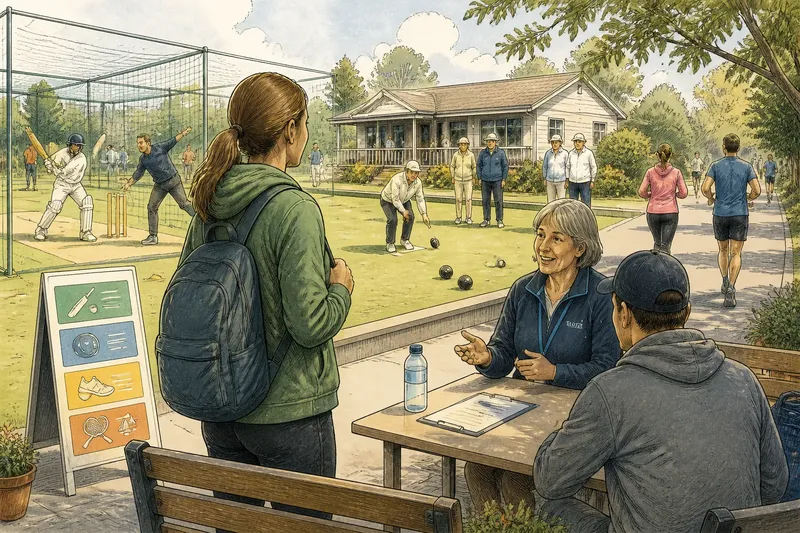
A community sports open day is easier to enjoy when you arrive with permission to watch as well as participate. You do not need to commit to a team, master a skill, or stay until the end. A simple plan helps you choose one activity, ask practical questions, and leave room to notice how the group works.
Use these choices as a guide, not a test. Community clubs vary: a local cricket side, a rowing group, a bowls club, or a neighborhood running group may structure its open day differently. The aim is to learn enough to decide what, if anything, you would like to try next.
1. Choose a manageable first activity
Look at the open-day notice before you go. It may name several activities, such as a short coaching session, a casual game, or a tour of the grounds. Choose the one that sounds interesting and least demanding to enter. An introductory batting station, for instance, may feel easier to try than joining a full match with unfamiliar rules.
Consider what you want from the visit. You might be curious about a sport you have watched from the stands, interested in gentle movement, or simply keen to see whether the club feels welcoming. Those are all useful reasons to attend. You do not have to choose based on what you think you should already be good at.
If the schedule is unclear, send a brief message to the club contact. Ask which session is intended for newcomers and whether you can observe before joining. A clear answer can help you avoid arriving at a competitive practice when you expected a casual introduction.
Pick one activity to start with; treat anything else as optional.
2. Check what to bring
Open days may provide equipment, or they may ask visitors to bring a few basics. Check the event notice for clothing, footwear, water, and any sign-in arrangements. A bowls club may have spare bowls, while a community tennis session may ask you to bring a racket if you own one. Do not assume that equipment is available, but do not buy anything before asking.
Wear clothes that let you move comfortably and suit the venue. A grass field, indoor hall, and hard court call for different footwear, and the club may have rules about what is suitable. If you have an existing injury or a health concern that affects participation, consider whether the activity fits your needs and seek qualified advice when appropriate.
Pack only what the notice calls for, plus a drink if suitable for the setting. If you are unsure about equipment or clothing, ask the organizer before the event; follow the venue’s rules and any relevant manufacturer instructions.
3. Arrive with a small question
A simple question makes it easier to start a conversation without feeling you must explain your whole sporting background. Try asking, “Where should a first-time visitor check in?” or “Is there a beginner group today?” These questions help you find the right person and clarify what will happen next.
Community clubs often rely on volunteers, so look for the named contact, welcome table, or person wearing an organizer badge. If nobody is immediately available, wait near the sign-in point rather than stepping into a drill or match. That gives staff a chance to guide you and reduces the risk of interrupting an activity.
Say plainly that you are new and would like to observe before deciding. You need not give a reason. A welcoming organizer should be able to explain where you can stand and whether any part of the session is reserved for participants.
One direct question is often enough to get oriented.
4. Observe the group
Watching is participation of a useful kind: it lets you learn the rhythm of the session before making a choice. Notice how people take turns, how a coach explains an exercise, and whether newcomers receive an introduction. In a community cricket session, you might watch how players rotate through a batting activity before deciding whether to join the next turn.
Pay attention to the practical environment too. Is there a place to sit? Can you hear instructions? Does the activity seem adaptable for different levels of experience? These details matter because an enjoyable first visit depends on more than liking the sport itself.
Imagine you arrive at a local badminton open day and find a doubles game already underway. You ask the organizer whether visitors can watch a round, then notice that beginners are offered a separate court. You can choose that court when a space opens, or leave knowing what the next session would involve.
5. Try one small part
If you feel ready, ask to join a short, clearly explained activity rather than jumping into the most demanding option. A passing drill, a practice throw, or a warm-up can give you a feel for the sport without requiring a long commitment. Tell the coach if you would prefer a demonstration first.
Pay attention to your own comfort as you take part. You can pause, ask for an adjustment, or return to watching. The purpose of an open day is to introduce the activity, not to judge your ability. A first attempt may feel awkward simply because the equipment, movement, or rules are unfamiliar.
Stay within the activity’s boundaries and follow the organizer’s directions. If the format feels too fast, ask whether there is a slower or beginner-friendly option. If no suitable option is available that day, you can still use the visit to learn how the club operates.
6. Ask about the next visit
Before leaving, ask what a normal session looks like and who to contact if you want to return. Useful details include the usual practice day, whether newcomers can attend without registering, and what equipment is expected later. You do not need to settle membership or make a long-term decision on the spot.
Ask how the club supports different experience levels. A group may have a beginners’ session, informal practice, or a volunteer who can explain basic rules. If the open day is crowded, request a contact name or a link to the club’s current information rather than trying to remember every detail.
Notice how the answer is given. Clear, patient information helps you understand what joining might involve; pressure to commit immediately is a reason to take time and think. You can thank the organizer and decide later.
7. Leave at your own pace
You are free to leave after observing, after trying one activity, or when the scheduled session ends. Before you go, thank the person who helped you and mention what you would like to know next, if anything. A polite goodbye is enough; you do not owe the club a commitment because you attended.
On the way home, note what you liked and what you would want to clarify. Perhaps the coaching felt friendly but the venue was difficult to reach, or the sport appealed to you while the session was more competitive than expected. Specific observations help you compare options without turning the visit into a verdict on your ability.
For your first community sports open day, success can mean leaving with a better sense of the sport and the people around it. If you decide to return, ask about the next newcomer-friendly session. If not, you can carry what you learned into another local activity.
Questions to ask before you go?
Can I attend just to watch?
Ask the organizer whether spectators are welcome and where they should stand. Some activities have restricted areas, so checking in first helps you observe without disrupting play.
Do I need to bring equipment?
Check the event notice or ask the club contact what is provided. If you have your own equipment, ask whether it suits the activity before bringing it along.
What if I do not know the rules?
Tell the coach or organizer that you are new and ask for a short explanation before joining. You can also watch a round or demonstration to see how the basic play works.
Can I leave before the event ends?
Usually, an open day does not require you to stay for the entire session, but let the organizer know if you are leaving during a guided activity. Leaving after a natural break makes it easier to thank the people who welcomed you.