How to Follow Different Sports Without Missing the Play
Learn how to follow different sports by matching your attention to each game’s structure, so you can spot the decisions and shifts that shape each match.
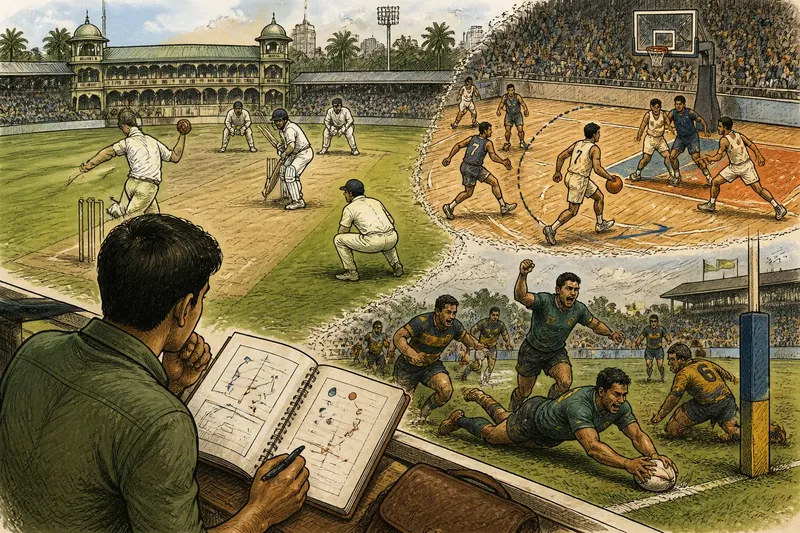
To follow different sports, track the choices each game rewards, not just the ball. At a cricket ground in Kolkata, that might mean watching the bowler, batter, and fielders between deliveries; at a basketball court, it might mean spotting a screen away from the ball before a drive.
Eastern regional sport includes games with very different rhythms and rules. A cricket innings, a fast court game, and a rugby match do not ask you to watch the same spaces or interpret pauses in the same way. Start with each sport’s structure, then choose one useful viewing habit.
Watch beyond the ball
What goes wrong: You follow the ball so closely that you miss the movement that creates the next play. In basketball, a screen away from the ball can open a driving lane. In soccer, a runner moving behind the defense may matter before the pass arrives.
Why it happens: The ball is easy to track, but the next decision may be forming elsewhere. Players create space, close passing options, and position themselves to receive before the ball reaches them.
What to try: Watch the immediate contest, then widen your view during a reset or transition. Pick one player away from the ball and notice where they move when possession changes. This gives you another point of reference without asking you to follow everyone at once.
Switch your attention between the ball and the nearest open space.
Read the pauses
What goes wrong: A quieter stretch feels like dead time, so you look away and return just as a decisive play begins. This can happen in sports with set pieces, innings, or deliberate changes of possession.
Why it happens: Some games build tension through preparation. A bowler and batter, or a team arranging a restart, are shaping what can happen next. The action has slowed, but the contest continues.
What to try: During a stoppage, notice who is positioned to receive, which side has space, and what the defense is protecting. Then watch the first movement after play resumes. The setup can explain the outcome better than the final touch alone.
When play pauses, ask what each side is trying to make possible.
Understand game clocks
What goes wrong: You assume the final minutes mean the same thing in every sport, or that a team leading late can simply protect its advantage.
Why it happens: The clock interacts with scoring and possession in different ways. A team may try to retain the ball, take risks to create another chance, or manage a limited turn. Stoppage time, innings, timed periods, and possession rules shape urgency differently.
What to try: Learn what ends a period or contest, whether the clock stops, and what a team can do to retain or regain possession. Read the score alongside those rules. The same score can call for different tactics early in a match and near the end.
Before a match, find out what the clock measures and what happens when it expires.
Separate possession from control
What goes wrong: You treat having the ball as proof that a team is in control, or assume a team without it has no influence.
Why it happens: Possession is only one part of a sport’s structure. A team may hold the ball while being forced into a poor area, or defend deliberately while waiting for a chance to counter. In cricket, the fielding side can shape each delivery through bowling choices and field placement.
What to try: Ask what the team with possession is trying to achieve and what the other side is trying to prevent. Depending on the game, look for territory, time, space, or a favorable matchup. This makes “Who has the ball?” a starting point, not the whole explanation.
Control is about the options a team can create, not just the object it holds.
Learn the scoring action
What goes wrong: The score changes, but you cannot tell why one play counted more, why a restart followed, or why a team celebrated a result that looked modest.
Why it happens: Scoring systems can include different values, boundaries, conversions, or other ways to earn points. Some games also distinguish the main scoring action from a follow-up attempt. Without the basic logic, the match can seem arbitrary.
What to try: Learn the ordinary scoring action and one rule that changes its value. Note what earns points, what ends an attack or turn, and what restart follows a score. You do not need every exception before you can follow the action.
Imagine you are watching a regional rugby match for the first time. A player grounds the ball in the opponent’s in-goal area, completing a try. The team then gets a conversion attempt: a kick at goal for extra points. Knowing that a try and conversion are separate scoring actions explains why play continues after the initial celebration.
Which viewing questions help?
Should I watch the ball or the players?
Start with the ball during a contest, then widen your view to nearby movement and open space. During a setup, notice positioning before play restarts.
How can I follow a sport with frequent pauses?
Treat each pause as preparation rather than empty time. Look for who arranges the restart, how players line up, and which area each side seems to protect or attack.
What should I learn before a first match?
Learn how points are scored, how play restarts, and what ends a period or turn. These rules explain many changes in urgency without requiring you to memorize every penalty.
How do I recognize pressure?
Watch whether a team’s options are shrinking: players may have less room, fewer safe passes, or less time to act. The scoreboard shows the stakes, while the available choices reveal pressure as it develops.
Choose a sport-specific habit
Say you are new to a local cricket match in Colombo and keep looking away between deliveries because the action seems repetitive. You decide to follow the bowler’s approach, the batter’s response, and the fielders’ positions after each ball. When a fielder moves closer and the batter plays cautiously, you can see how the change affects the next delivery, even if no boundary follows.
That habit will not transfer unchanged to every sport. In a fast court game, follow transitions and passing lanes. In cricket, follow the sequence of deliveries and the field’s response. In a field game, notice how teams gain or surrender space. Match your attention to the decisions that shape the next play.
To follow different sports, keep one question in mind: what is each side trying to create, and what limits its choices? When a local crowd suddenly reacts, look for the pressure, opening, or tactical shift that came just before it. That small pause in your own attention can reveal why the moment mattered.