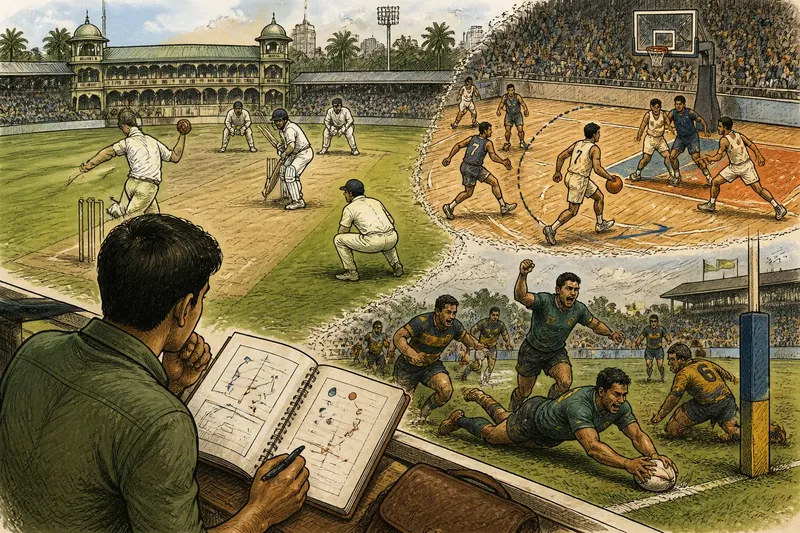
How Supporters Kept Score at Local Matches
How supporters kept score at local matches with clear tallies, shared notes, and careful checks, preserving the details that made a game memorable.
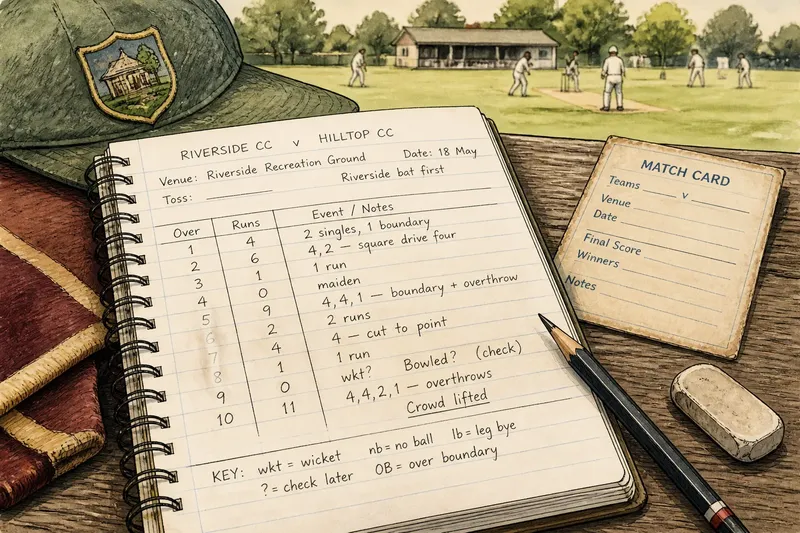
At a local match, a pencil tally can preserve the order of play as well as the final score. How supporters kept score depended on the game, the purpose of the notes, and the tools available; it did not follow one universal path from informal marks to printed programmes.
A pocket notebook, a match card, or a shared club ledger can all hold a useful record. The aim is simple: note what happened in a form that remains understandable after the crowd has gone home.
Choose a clear purpose
Decide what the page should preserve before choosing a notation system. A personal reminder may need only the result and one memorable moment. A club record may also need the teams, venue, date, scoring sequence, and any uncertain details marked for later checking.
Use a pencil and a small notebook or a printed match card. Write the teams and known fixture details at the top, then leave room for the score and brief notes. Keep abbreviations few and explain them on the page.
Match the format to the sport. A soccer supporter might record the scorer and the approximate point in the match. A cricket follower could use an over-by-over tally. A hockey fan might note a goal and the situation around it. Follow the sport’s existing units instead of forcing every match into the same layout.
Prepare the score page
Check the sport’s scoring conventions and likely player names before the match. A club roster, fixture notice, or local paper can help with spelling. If a team sheet is not available, leave the name blank rather than guessing.
Use these checks to prepare a page that is easy to update and review:
- Check that both team names are known; if either is uncertain, leave space and confirm it from a team sheet or club notice later.
- Check whether the venue and date are confirmed; if they are, write them at the top, and if not, leave a labeled blank rather than guessing.
- Check which scoring event matters for the sport; if the notation is clear, write a short key, and if it is not, use plain words instead of an unexplained symbol.
- Check whether player names are available; if they are, copy the spelling, and if they are not, leave room to add names after the match.
- Check how much detail you can manage while watching; if brief notes are practical, reserve a narrow event column, and if not, record only the score sequence.
- Check whether another person will contribute; if so, agree on abbreviations and uncertainty marks first, and if not, keep the page in your own consistent shorthand.
Say you are preparing to follow a community cricket match and want to remember how an innings changed. You write the team names and venue at the top, make columns for over, runs, and event, and leave player names open until the teams are announced. During play, you mark each over’s total and add only a few words when something changes the sequence. The resulting page should let you trace the innings without requiring a full commentary.
Record play as it happens
Watch first and write during natural pauses. Mark the main scoring event promptly, then add a short detail if you have time. If you miss a moment, leave a gap instead of reconstructing it from a guess.
Separate what you saw from what you inferred. A question mark beside a possible scorer shows that the name needs checking. A note such as “the crowd lifted after the save” is a personal impression, not an official event.
If your tally differs from the scoreboard, preserve the difference and check it during a break or after play. Do not silently change your notes. A discrepancy may come from a missed signal or a misunderstanding of the scoring convention.
Share notes with others
When several supporters contribute, agree on a few conventions before the match: team abbreviations, how to mark uncertainty, and who will prepare the readable copy. One person can follow the score while another records names or notable moments, but each role should stay manageable.
Afterward, compare pages and treat disagreements as questions until they can be checked. For a club or neighborhood side, a shared notebook might include the teams, venue, conditions noticed by spectators, and a concise account of how the score changed. Explain local nicknames and unusual shorthand so a newcomer can follow the record.
What should supporters record?
Is a score tally enough?
A tally is enough when the aim is to remember the result and its progression. Add names or short notes only when they help explain a moment you want to preserve.
How should uncertain details be marked?
Use a question mark or a note such as “check scorer” beside the entry. Keep it visible until a reliable club notice, score display, or informed observer clarifies the detail.
What belongs in a club record?
Include the teams, venue, date if known, final score, and a readable sequence of scoring. Label personal impressions as observations so they are not mistaken for official rulings.
Should match notes be paper or digital?
Paper is quick to mark during play, while a digital file is easier to search and share afterward. Choose the format the people maintaining the record can keep clear and accessible.
Review and preserve the record
After play, fill in the final score and review uncertain names or events. Separate details you witnessed from information someone supplied later. If a point remains unconfirmed, leave it open or describe the uncertainty plainly.
Give a kept record a useful title that identifies the teams and match. Add the venue and date when known, and name the note-taker if the account will circulate. A club folder can hold the paper original; a digital transcription can make the wording easier to search. Keep the original if its corrections help explain how the account took shape.
How supporters kept score at local matches is still useful to remember: a compact tally can hold both the agreed result and a spectator’s view, as long as each is labeled clearly. Before closing the notebook, add one specific detail beyond the score that a future reader could recognize, such as the sequence of a late goal or a change in the innings.